
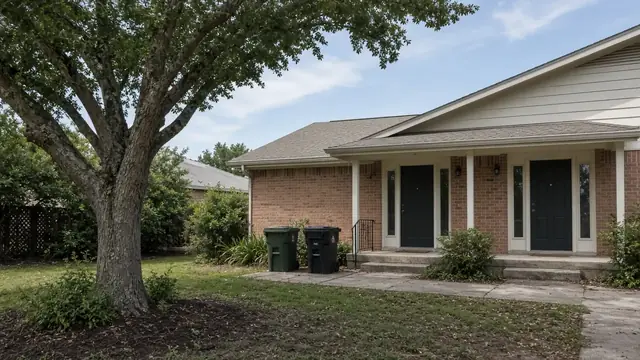
Sell a Texas House With Tenants Still Living There
A tenant does not block a sale, but the lease and the deposit move with the house. Here is what Texas law says and how to plan around the people living there.
- Close in 7–14 days
- We pay all closing costs
- Sell as-is, no repairs
Get Your Free Cash Offer
From Address to Closing
Three steps, start to finish.
How it works
Send your address
Send your address. We review recent sales, repairs and any liens.
Get a cash offer
You get a cash offer. Free, no obligation.
Close and get paid
Close at a Texas title company in 7–14 days. We pay all closing costs.
Yes. You can sell a Texas house with tenants in place. The lease and security deposit generally pass to the buyer, so have the lease, rent ledger and deposit records ready. Showings and notice still follow the lease and Property Code rules.
A Texas rental can be sold with someone still living in it. The lease and the security deposit do not disappear when you sign a sales contract, so start with three papers: the lease, the rent ledger and the deposit record.
This page covers a single-family rental. For a duplex through fourplex, see selling a small multifamily property; for a house sitting empty between tenants, see vacant rental risks.
Can you sell a house with tenants in Texas?
Yes. A rental does not have to be empty to be sold; what changes is who the landlord is. The Texas State Law Library explains that a new owner is bound by the existing lease, and unless the lease says it ends on a sale, the new owner cannot remove the tenant or change the lease. When the term runs out, the new owner can renew it or change the rent and terms.
The standard resale contract builds this in. Under paragraph 4 of TREC No. 20-19, after the effective date the seller may not create a new lease or amend an existing one without the buyer's written consent. When box 4A is checked, the Addendum Regarding Residential Leases (TREC No. 51-1) is attached, and it says what happens to each lease at closing.
Selling a tenant-occupied property: your options
| Route | Fits when | Watch for |
|---|---|---|
| Sell with the tenant in place | The tenant pays on time and the buyer wants a rental | Fewer buyers who plan to live there; lease and deposit records must be ready |
| Wait for the lease to end | The term ends soon | A tenant who stays past the end date; carrying costs after move-out |
| Notice to a month-to-month tenant | No fixed term is left | The notice rules below |
| Written move-out agreement | The tenant will leave early on agreed terms | Put the date, the deposit and any payment in writing, signed by both |
| List with an agent | The house shows well and the tenant cooperates | Access depends on the lease |
The lease term, the tenant and your timeline decide which fits. Weighing whether to keep renting instead? Our relocation guide compares renting the house out with selling it.
What happens to the lease and the security deposit
The TREC 51-1 addendum offers two choices, and only one can be checked:
- A. Termination: all residential leases must end by closing, and the seller delivers the house with no tenant in possession. The form warns that this paragraph does not amend or end any existing lease, and tells you to consult an attorney and check the lease for any right to end it before agreeing.
- B. Assignment and assumption: the buyer takes over the leases at closing. The seller transfers the security deposits to the buyer, and the buyer gives each tenant a signed statement that it has acquired the property and is responsible for the deposit, with the exact dollar amount. The seller also states, to its knowledge, whether each lease is in force, whether any tenant is in default or has prepaid rent, and whether there are disputes.
The deposit rule comes from Property Code Section 92.105. After a sale, the new owner is liable for returning deposits from the date it acquires title. The seller stays liable for deposits it collected until the new owner receives them or assumes the liability, unless a written contract says otherwise. Bring the deposit ledger to the title company.
Notice to a month-to-month tenant
A monthly or month-to-month tenancy can be ended by either the landlord or the tenant with notice under Property Code Section 91.001. When rent is paid by the month or longer, the tenancy ends on the later of the date in the notice or one month after the notice is given. If the rent-paying period is shorter than a month, the minimum is the number of days in one rent period.
Those default rules do not apply if you and the tenant signed an agreement setting a different notice period, or no notice, or if there is a breach of contract recognized by law. Read the lease's notice clause first. If the tenancy ends mid-period, the tenant owes rent only up to the termination date.
Give the notice in writing and keep a dated copy. A landlord who later files an eviction because the tenant is holding over must also have met these termination rules, says Section 24.005. Section 91.001 covers monthly and month-to-month tenancies. A fixed-term lease generally runs to its end date unless the lease lets you end it early, so you sell with the lease, wait, or agree on a move-out in writing.
Showings and entry while the tenant lives there
Start with the lease's access clause. The Texas State Law Library says no state law regulates a landlord's entry in Texas. The lease may allow entry, may or may not require notice, and may authorize others to enter, such as prospective buyers. If the lease does not allow entry or says nothing about it, the landlord may not have the right to enter without the tenant's permission, apart from possible exceptions for emergencies or repairs. The library adds that entering more often than necessary or at unreasonable times may breach the tenant's right to quiet enjoyment.
- Tell the tenant in writing that the house is for sale and what the lease says about access.
- Offer set showing windows and confirm each visit ahead of time.
- Group buyer visits, the inspection and the appraisal so the house is opened fewer times.
If the tenant refuses access the lease allows, talk to a Texas real estate attorney before acting on it.
Selling a house with tenants who won't leave in Texas
A tenant who refuses to move does not block a sale, but getting the house empty takes either a written move-out agreement or the eviction process below. A tenant who stays after the right of possession ends and refuses a written demand to leave commits a forcible detainer under Property Code Section 24.002. If no move-out can be agreed, the remedy is an eviction suit:
- Notice to vacate. Section 24.005 requires at least three days' written notice to vacate before you file, unless a written lease or agreement sets a shorter or longer period. When the case is based on unpaid rent, the notice may have to be a notice to pay rent or vacate.
- The right court. Under Sections 24.004 and 24.0041, the suit goes to the justice court in the precinct where the property sits.
- The petition. Texas Rule of Civil Procedure 510 governs eviction cases. Rule 510.6 requires a sworn petition filed in that precinct; a petition filed elsewhere must be dismissed.
Never force the move yourself. Section 92.0081 bars keeping a tenant out except by judicial process, with narrow exceptions; even its lock change for unpaid rent needs a lease clause, advance written notice and a new key available at any hour. Section 92.008 bars cutting a tenant's utilities except for bona fide repairs, construction or an emergency, apart from a narrow, notice-heavy rule for electricity the landlord submeters or allocates. Under either section, the tenant can recover possession or end the lease, and recover one month's rent plus $1,000, actual damages, court costs and attorney's fees, less any rent owed.
Our guide to evicting a squatter walks through the court steps. A squatter is not a tenant, so the notice rules and some steps differ, but the case goes to the same justice court. Have a Texas attorney handle an eviction or review your papers before you file.
Tenants with a housing voucher
If a Housing Choice Voucher (Section 8) pays part of the rent, there is a second contract: the Housing Assistance Payments (HAP) contract between you and the local housing agency. HUD's HAP contract form (HUD-52641) says the owner may not assign it to a new owner without the agency's prior written consent, and the new owner must agree in writing to be bound by it. Its tenancy addendum lists sale of the property as a possible good cause to end the tenancy after the initial lease term, without preempting contrary state or local law. Call the agency before you sign a sales contract and ask what a transfer requires.
Selling a house with tenants in Dallas County
Eviction court. Dallas County's Justice of the Peace page lists ten justice of the peace courts, JP 1-1 through JP 5-2. It notes that JP districts and constable precincts are the same and links a tool to locate the district for an address, so look the house up there before you file. Each court posts its own eviction forms. The JP 3-1 evictions page, for example, links an eviction petition, a defendant's answer form and a fee sheet effective January 1, 2026 that lists $134 for filing and service on one defendant. Use the forms and fee sheet of the court for your precinct.
City of Dallas rentals. Inside Dallas city limits, rented single-family homes, each duplex unit and individual condo units must be registered every year; our Dallas page covers the fee and the inspections. For a sale, the program's FAQ adds two points: a registration lasts one year from the date of registration, and the fees are not refunded when you sell.
Records. Look the house up on the Dallas Central Appraisal District site and with the County Clerk's Recording Division, which records deeds and the liens tied to them. Check that both show the owner name you will sign under.
Selling a rental property in Texas: the tax side
A rental is taxed differently from the home you live in, so talk to a tax professional before you sign. The main federal points:
- Depreciation. Publication 544 describes unrecaptured section 1250 gain as, generally, the part of a long-term gain on real property that is due to depreciation. Topic 409 says it is taxed at a maximum 25% rate.
- A 1031 exchange. Under the IRS like-kind exchange rules, gain generally is not recognized when business or investment real estate is exchanged for like-kind property, but gain is recognized to the extent of any money or other non-like-kind property received. The Form 8824 instructions set the clock: identify the replacement within 45 days after the transfer and receive it by the earlier of the 180th day or your return's due date, including extensions. They also cover exchanges made through a qualified intermediary.
- The home-sale exclusion. Publication 523 requires that you owned the home and lived in it for at least 24 months of the previous 5 years, so a rental that was never your home generally does not qualify.
- State tax. Article 8 of the Texas Constitution bars a state tax on individuals' net incomes (Section 24-a) and on their capital gains (Section 24-b).
Selling a rental to Cash Home Advisors
If the tenant cooperates and the house shows well, listing with an agent can reach more buyers, at the cost of showings and time. A cash buyer or investor tends to fit when the lease runs for months, the tenant is behind, or you would rather not manage a turnover first.
Cash Home Advisors buys houses with tenants in place; we buy occupied and vacant rentals alike. We can close in 7–14 days, and we pay all closing costs. Have the lease, rent ledger and deposit record ready, and make sure the contract says what happens to each lease and deposit. Read how it works or request an offer. If a foreclosure date is set, see stopping foreclosure by selling; the state index is the Texas hub.
Cash Sale vs. Listing With an Agent
How a sale to Cash Home Advisors compares with listing your house. Sources are listed under the table.
| Cash Home Advisors | Listing with an agent | |
|---|---|---|
| Time to close | Close in 7–14 days | An average of 63 days on the market for Texas homes sold (as of July 2026 data)2 |
| Repairs | Sell as-is, no repairs | The buyer may inspect the house and negotiate repairs1 |
| Agent commissions | No agent commissions | Not set by law; negotiated in your listing agreement1 |
| Closing costs | We pay all closing costs | You pay seller expenses, such as preparing the deed and half the escrow fee; who pays the owner's title policy is negotiated13 |
| Getting an offer | Free, no obligation | Varies; set in your listing agreement |
Sources
Frequently Asked Questions
Does selling my rental end the tenant's lease in Texas?
No. A sale changes the landlord, not the lease. The new owner is bound by the existing lease unless the lease says it ends on a sale, and can renew it or change its terms once the term expires.
Who returns the tenant's security deposit after I sell?
Under Property Code Section 92.105, the new owner is liable for the deposit from the date it takes title and must give the tenant a signed statement with the exact amount. You stay liable for deposits you collected until the new owner receives them or assumes the liability, unless a written contract says otherwise.
How much notice does a month-to-month tenant get?
With monthly rent, Property Code Section 91.001 ends the tenancy on the later of the date in the notice or one month after the notice is given. A different period applies if you and the tenant signed an agreement setting one, and the rule does not apply to a breach of contract recognized by law.
Can my tenant refuse showings?
The Texas State Law Library says no state law regulates landlord entry, so the lease controls. If it allows entry for prospective buyers, follow its notice terms. If it is silent, you may need the tenant's permission. Talk to an attorney before pressing the point.
Can I change the locks or shut off utilities to get a tenant out?
No. Property Code Section 92.0081 bars keeping a tenant out except by judicial process, with narrow exceptions, and Section 92.008 bars cutting utilities except for bona fide repairs, construction or an emergency, with a narrow rule for electricity the landlord submeters or allocates. A tenant can recover one month's rent plus $1,000, actual damages and attorney's fees.
Explore other situations
Get Your No-Obligation Cash Offer
- No agent commissions
- Free, no obligation
- A real person calls you back